SOYBEAN OIL PUFF PASTRY & PIE CRUST TESTING
Thanks to its wide working temperature range, excellent melting properties and general ease of workability, U.S.-grown high oleic soybean shortening meets the baking industry’s need for a functional, sustainable ingredient for puff pastries.
PUFF PASTRIES
Soy-based baker’s margarines, a new ingredient which will soon be introduced to the market, are formulated with high oleic soybean oil or conventional soybean oil or combinations of both, and outperformed palm and partially hydrogenated oil in puff pastry applications in terms of finished bake height and structure, as well as desired honeycomb texture, which adds to overall likeability.
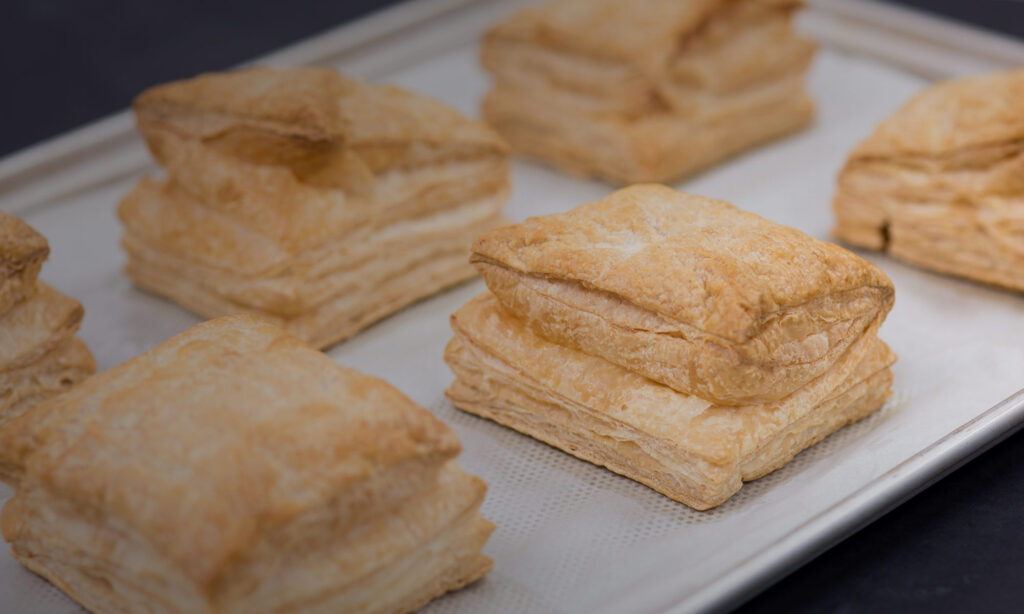
Soy-based solutions performed on par with butter, which is considered the “gold standard” for puff pastry.

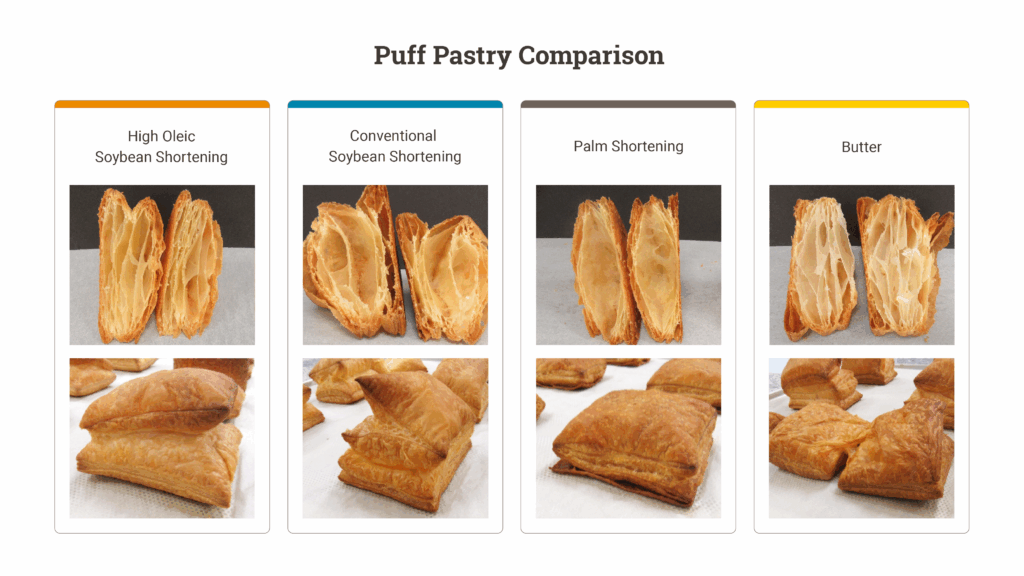
Tests compared puff pastries analytically and visually for color and appearance. All margarines in the study showed a wide range of differences in firmness and functionality when measured at various working temperatures on the texture analyzer.
The ideal puff pastry will show even layer separation and puff height, and maintain height after baking. The palm-based baker’s margarine produced pastries with the least amount of height, resulting in pockets rather than layers in finished rolled and baked dough. While butter-based pastries showcased the greatest height, the layers toppled over after baking.
PIE CRUSTS
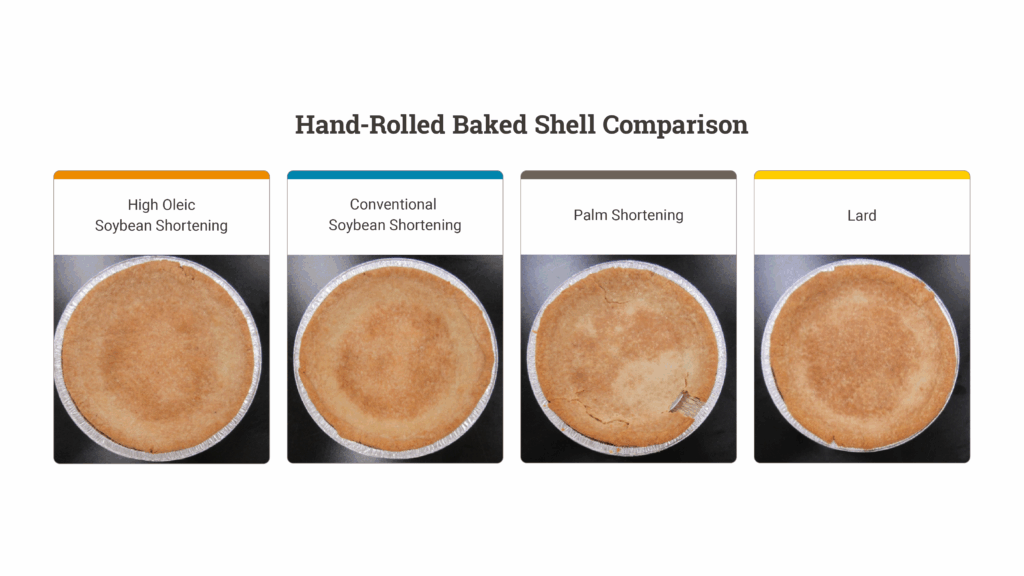
High oleic soybean shortening performed as well or better than partially hydrogenated oils, and outperformed palm-based shortenings and lard in all pie dough evaluations, including firmness, flakiness, height and temperature workability.
Pie crust shortenings were tested at both refrigerated and room temperatures.
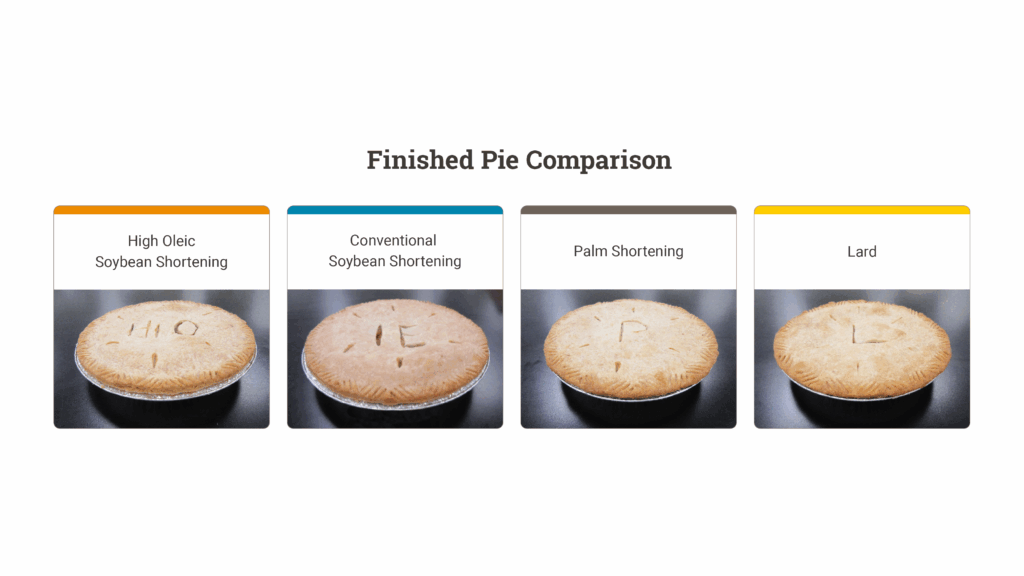
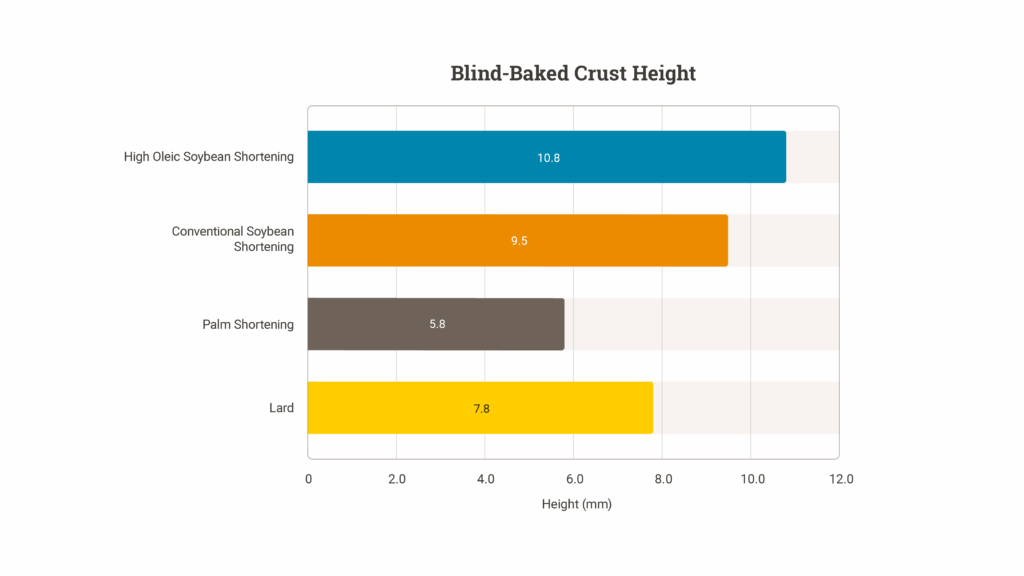
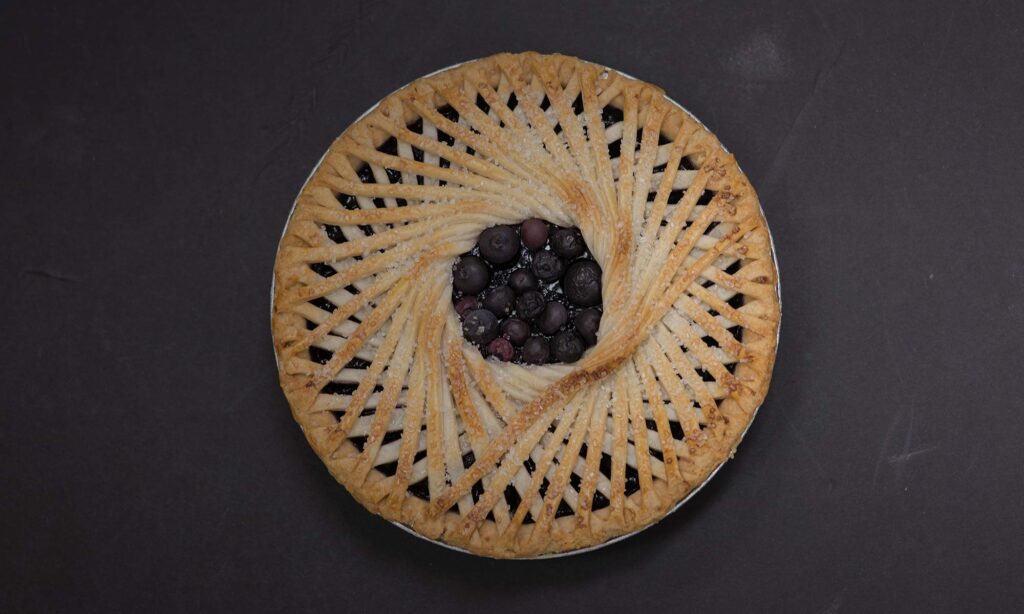
High oleic soybean shortening produced pie crusts with desired characteristics, including evenly browned, textured, flaky crust with an ideal finished product height and minimal shrink.
The dough made with high oleic soybean shortening also proved to be versatile, performing equally well under hand-rolling and a pie press. Pie crusts made with palm shortening resulted in the least height and showcased uneven browning and excess shrink while using the pie press.
High oleic soybean shortening also reduced moisture uptake in pie crusts, preventing them from becoming soggy and helping to maintain texture and mouthfeel. Conventional soybean shortening was comparable to high oleic soybean shortening for mouthfeel.

EXPLORE MORE STUDIES